A motorcycle that will not start gives a buyer a question, rather than a diagnosis. The fault might be known, partly investigated or completely uncertain. Before asking for an offer, it helps to organise what you can show about the bike and what still needs assessment.
A condition record does not have to be elaborate. It is a consistent set of details, photographs and notes that describes the motorcycle as it stands. A useful record keeps observations separate from assumptions, so a buyer can ask informed questions without first untangling an optimistic description.
If you are considering an option such as cash for motorcycles, prepare the bike's basic details and condition information before making the enquiry. Ask what the buyer needs to assess this particular motorcycle and whether any initial offer remains subject to inspection or further checks. The same record can help you compare the responses you receive.
Establish which motorcycle is being assessed
Start with the make, model, stated year and any known variant details. Use the records available to you and note a discrepancy rather than choosing the description that sounds more valuable. Similar-looking motorcycles can have different equipment or model details that matter to an assessment.
Record the odometer display if it can be read, including the units shown. Distinguish the displayed reading from a claim about the bike's entire history. If the instruments have been replaced or the reading cannot be confirmed, state that clearly.
Keep relevant identifying information available for the buyer's appropriate checks through a suitable private channel. There is no need to publish personal documents or every identifying detail in a public advertisement. Ask what information is needed at each stage of the enquiry.
Use one consistent description across the photographs and notes. If you later discover that the variant or year was recorded incorrectly, update the file and tell anyone who is already assessing it. A corrected fact is more useful than allowing different buyers to work from different versions.
Write a short history of the current problem
Describe the last time you personally saw the bike running and what happened afterwards. If you do not know, say so. A motorcycle bought as a project has a different evidence trail from one you used regularly until a recent fault.
Record significant events in a simple order. These might include a period of storage, a breakdown, an accident or parts removed during an unfinished repair. Include dates where you can support them, and use approximate wording where your memory is less precise.
Rod Chapman's April 2025 motorcycle selling guide for bikesales discusses preparing accurate answers about a bike's details, service history and condition. For a non-runner, that preparation is especially useful because the buyer may not be able to assess normal operation from the initial enquiry.
Keep workshop findings separate from your own observations. A dated report or invoice can explain what was checked, but do not expand its wording into a broader diagnosis. If a mechanic inspected one issue, that does not establish the condition of every other system.
Photograph the bike as it currently stands
Take clear overview photographs that show the complete motorcycle from accessible positions. Use ordinary daylight where practical and keep the background simple enough that the bike is easy to see. The purpose is to document condition, rather than create a dramatic sales image.
Add closer photographs of visible damage, missing components and areas the buyer asks to review. Include enough surrounding detail to show where the issue is on the bike. A close-up without context can be difficult to interpret, especially when several similar parts are involved.
Do not conceal an issue by photographing only the cleaner side or arranging an accessory over damage. Equally, avoid making a small mark look larger than it is through an extreme crop. A balanced set of images helps the buyer understand the whole machine and the specific concerns.
If the motorcycle cannot be moved safely, explain that limitation and photograph what is accessible. Do not attempt to reposition a damaged or unstable bike just to complete a picture list. The buyer or transporter can discuss what further access is needed.
Describe symptoms without guessing at the cause
“It will not start”
This phrase leaves many questions open. In your notes, describe what you have already observed, when you observed it and whether anyone has investigated the problem. You do not need to perform new mechanical tests simply to make the description sound more complete.
Avoid calling it “just a battery” unless that conclusion is supported by an appropriate assessment. A buyer may price uncertainty differently from a confirmed fault, and an unsupported diagnosis can create disagreement when the bike is inspected.
“It has no power”
State the observation as precisely as you can without claiming more than you know. For example, you might know that the dashboard did not illuminate during a previous attempt. That is different from saying the entire electrical system has failed.
If parts have been disconnected or removed, include that information beside the symptom. The motorcycle's current state may differ from the condition in which the original problem occurred. Keeping those facts together makes the description easier to interpret.
“The condition is unknown”
Unknown is a useful category when it is honest. A stored project may have systems you have never seen operate. List what is unverified rather than describing every part as working because it appears present.
If a buyer needs a mechanical assessment, agree how that will happen. A condition record supports the discussion, but it does not replace an inspection by someone qualified to assess the relevant issue.
List what is included and what is missing
Record keys, loose components, accessories and available records that are part of the proposed sale. If a part has been removed, say whether it is present, stored elsewhere or unavailable. Photograph loose components where their identity can be established without guessing.
Separate items fitted to the motorcycle from items merely supplied with it. A replacement part in a box is not evidence that it fits or that it solves the fault. Include its known description or part number and leave compatibility for the appropriate checks.
Do not assume an accessory automatically increases the offer by its original purchase price. Ask whether the buyer includes it in the assessment and whether the quoted scope covers everything you intend to hand over. A clear inventory reduces misunderstandings about what stays with the seller.
Keep personal belongings separate from the bike and the sale inventory. Before handover, review storage compartments and any accessory bags according to the agreed arrangement. The condition file should describe the motorcycle and included items, rather than private material that happens to be stored with them.
Use parts research to frame the repair question
A non-runner may prompt a decision between obtaining a repair assessment and selling in its present condition. Start by finding out what is known about the fault and what remains uncertain. Parts prices alone cannot establish the complete cost or feasibility of repair.
Our comparison of used and new motorcycle parts discusses the broader parts decision. For your bike, compatibility still needs to be checked against the model, year, variant and relevant part details. A similar-looking component is not enough evidence.
If an uncommon part is involved, the guide to finding rare motorcycle parts can help organise the search. Confirm current availability and condition with the supplier rather than treating an old listing as a repair plan.
The Bike Buyers' April 2026 motorcycle valuation article discusses condition and demand as factors in an offer. Its examples are from the United States, so its price ranges should not be treated as Australian quotations. For a local decision, obtain an assessment of the actual bike and clarify the basis of the offer.
Send a concise file and invite specific questions
Put the core details at the beginning: which bike it is, whether it currently runs, the known history and the main uncertainties. Attach the relevant photographs and inventory. The recipient should not have to search through a long conversation to discover that an important component is missing.
Ask which further details would help the assessment. A buyer may need a closer image, a record of previous work or clarification about the current state of assembly. Respond with the information you have and identify what you cannot verify.
Our guide to selecting a motorbike wrecker provides context for evaluating the discussion. In a sale enquiry, look for a clear explanation of what is being assessed and which assumptions remain in the proposal.
Keep copies of the information sent and any later corrections. If the bike changes condition while you are comparing options, update the relevant buyers. An offer based on an earlier complete bike may not describe the same sale after components have been removed.
Compare the terms around the offer
An initial figure is only part of the response. Confirm whether it is provisional, what items it includes and what further assessment is expected. Ask how collection arrangements affect the proposal rather than assuming transport is included.
Describe any known access limitation or difficulty moving the bike. The collection team needs accurate information to decide on a suitable arrangement. Do not promise that the motorcycle rolls, steers or can be loaded easily unless that has been established.
Compare offers on the same condition record and included inventory. If one buyer has seen additional damage photographs or received a different description, the figures are not based on identical information. Resolve that difference before drawing conclusions about the price.
Keep the practical decision in view. The seller may value a straightforward complete-bike sale, while another option may involve further work, storage or uncertainty. Describe those differences concretely rather than assuming one route always produces the best outcome.
A fictional stored commuter example
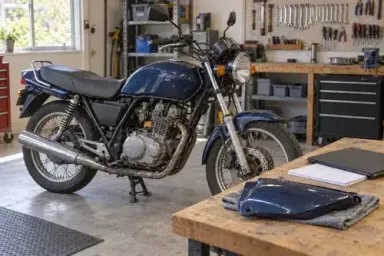
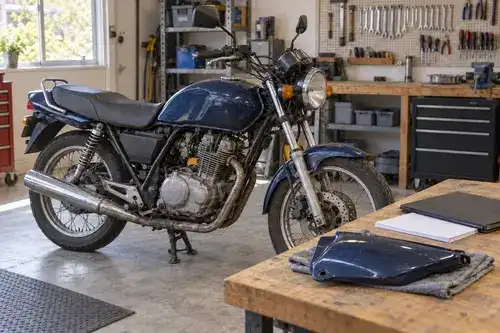
Imagine a commuter motorcycle that has been stored for several years. The owner remembers a starting problem but has no workshop diagnosis. A side panel was removed during an unfinished investigation, and the panel is still present in a box.
The owner records the displayed odometer reading, the known storage history and the unconfirmed fault. Photographs show both sides of the bike, the missing panel position and the loose panel itself. The notes say that the current running condition has not been verified, rather than calling the problem a simple battery replacement.
A buyer can then ask focused questions and explain what remains subject to assessment. The example does not establish the motorcycle's value. It shows how an honest record gives the conversation a more reliable starting point.
Good information makes uncertainty easier to discuss
A non-running motorcycle does not need an optimistic story to be described usefully. Clear identity details, a factual history, current photographs and a complete inventory give a buyer something concrete to assess. Keeping the unknowns visible helps both sides understand the proposed sale and the questions still to resolve.