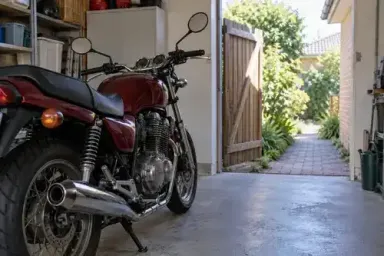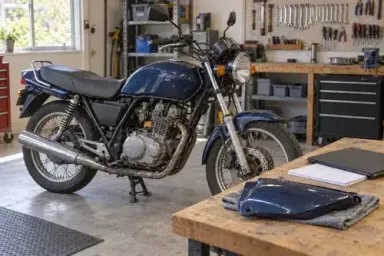
A non-running motorcycle can be difficult to describe for collection. The engine's condition is one question, but the place where the bike is stored raises several others. A machine inside a garage behind a narrow gate presents a different planning problem from one beside an accessible driveway, even when both have the same reported fault.
Prepare a short access brief before confirming a collection arrangement. Describe the motorcycle, its present location and the route out of storage, then identify what you do not know. The brief gives the collecting party useful information to assess the job without asking you to move, test or dismantle the bike first.
Start the enquiry with collection facts
If a search for 'sell moto' options has brought you to a buyer enquiry, include the access information alongside the motorcycle description. Explain where the machine is, whether it is non-running and what restrictions apply at the property. Ask the buyer to confirm what it needs before collection can be arranged.
Keep the sale enquiry and the collection assessment connected. Do not assume that an expression of interest means the buyer has accepted every access condition or arranged suitable transport. A brief description can start the conversation, but the collecting party needs the opportunity to ask questions and confirm its approach.
Use current information rather than the situation when the bike was first parked. A garage may now contain other belongings, a gate may be locked, or the person with access may be unavailable on the proposed day. Those changes belong in the enquiry even if the motorcycle itself has not changed.
Describe what is known about movement
Non-running describes the engine's reported operating state. It does not fully describe whether the motorcycle can be moved. Keep running, rolling and steering information separate, and avoid using one as shorthand for the others.
Report only what is already known. If the bike was last moved into the garage several years ago, say when that happened rather than claiming that it still rolls freely. If movement has not been assessed, write that it is unknown. Do not perform a new test solely to complete a form or satisfy an informal request.
Known missing wheels, damaged components or an unavailable key can be relevant to the provider's assessment. Describe the facts and supply appropriate photographs where they can be taken safely. Do not try to release a lock, free a component or improvise a way of moving the bike.
The transport-provider discussion of non-operable motorcycle collection highlights the need to disclose condition before arrangements are made. For your own enquiry, that means giving the selected provider a specific account of known limitations and letting it decide what further assessment is required.
Avoid diagnostic labels unless they come from a relevant assessment. An engine that has not been started during your ownership is different from one diagnosed with a particular fault. A brief can explain both the observation and its limits without turning uncertainty into a mechanical conclusion.
Show the route from storage to collection
Photograph the collection location from accessible positions. An overall view of the stored motorcycle and a sequence showing the route to the property entrance can explain more than a close-up of the bike alone. Label the pictures so another person can follow their order.
Point out gates, doorways, changes of direction, steps, slopes and changes of surface. Report overhead or parking restrictions you know about. The purpose is to show the route as it exists, not to decide whether a particular vehicle or loading arrangement will fit.
If a dimension is requested, explain how it was obtained and any uncertainty. Do not substitute an approximate gate width for a provider's assessment of the full route. A wide opening may still lead to a tight turn, and a clear path in one photograph may be obstructed farther along.
Do not move the motorcycle into a more accessible place before the method has been agreed. Keep the description tied to its current position. Where access is obstructed by belongings, discuss what can reasonably be cleared without touching or destabilising the bike, and confirm the revised situation with the provider.
A simple sketch can help connect the photographs. Mark the storage position, the entrance and the relevant route using ordinary labels. It need not resemble a technical plan. Its value is showing how the separate views relate to each other and where the unanswered questions lie.
Make permissions and timing explicit
Identify who can provide access to the storage area and who will be present. If the bike is at a workshop, shared property or storage facility, discuss the proposed collection with the relevant person before offering a firm time to the collecting party.
Describe practical restrictions accurately. These may include opening hours, a need to arrange a gate key or a requirement to book access with a site manager. Confirm the actual arrangements for that location rather than assuming they match a previous collection elsewhere.
Keep availability separate from a booking. A statement that you are free on Friday afternoon does not establish that the provider has accepted that window. Ask for the agreed date, contact arrangements and any conditions that must be resolved beforehand.
Do not share gate codes or other private access details in a public sale advertisement. Provide necessary information directly to the confirmed collecting party through an appropriate channel. The initial brief can identify that controlled access exists without publishing how to enter the property.
If someone else will attend on your behalf, clarify their role with everyone involved. Make sure the parties know who can answer access questions and where any unresolved sale decisions need to be referred. Avoid leaving the attending person to interpret an incomplete conversation at the gate.
Explain keys, loose parts and inclusions
State whether keys are available, where they are held and what is known about them. If a key's function has not been established, preserve that uncertainty. Do not describe it as a complete working set merely because it was handed over with the motorcycle.
The site's guide to used motorcycle ignition parts provides context for asking precise questions about components and identity. For collection planning, report the actual key and ignition situation and let the relevant specialist determine what it means for access and handling.
List loose parts separately from the complete motorcycle. Note which items are included in the proposed sale, which are excluded and which still need agreement. A box visible beside the bike should not become an assumed inclusion simply because it appears in a collection photograph.
Give the collecting party an accurate description of the additional items. Mention their number, general type and location without inventing a weight or declaring that they can travel with the bike. Ask the provider to confirm whether they fall within the agreed collection scope.
Keep documents and personal belongings distinct from parts. Decide what information is relevant to the transaction and what needs to remain private. If a record is to be supplied later, label that as a pending item rather than implying it will be waiting with the motorcycle.
Send a compact brief before confirming arrangements
Bring the information together in one message or document. A compact brief is easier to review than details scattered across several calls, photographs and forwarded messages. Keep it factual and put unresolved questions where they can be seen.
Include these points:
- Motorcycle description and present storage location.
- Reported running state and any known movement limitations.
- Unknown details that have not been assessed.
- Dated photographs of the bike and access route.
- Gates, turns, surfaces and other relevant restrictions.
- Person responsible for access and their availability.
- Key situation and separately listed loose items.
- Questions requiring the collecting party's confirmation.
Use a date or version label so later changes can be identified. If the provider requests more photographs, add them to the same sequence where practical. Explain what the new material shows rather than sending an unlabeled image and expecting its significance to be obvious.
Keep the brief focused on collection. A detailed repair history can remain in the sale information, with the relevant collection limitations summarised here. That separation helps the provider find the access facts without losing the wider condition record.
Separate collection scope from sale terms
Ask who is arranging the transport and what the proposed collection covers. Clarify the motorcycle, location and additional items that have actually been discussed. Do not infer an agreed service from a general website description or an informal statement that collection is possible.
Use the motorbike wrecker selection guide to frame questions about the party you are dealing with. For the individual transaction, seek direct answers about the actual arrangement rather than treating a general guide as confirmation.
Keep any unresolved commercial question visible. If the offer depends on further assessment, say so in your own notes. If collection details are still being discussed, do not describe them to another person as final. A clear record of what is agreed and what remains open reduces avoidable confusion.
Avoid promising that the motorcycle will be ready for a particular loading method. That judgement belongs to the provider after it has considered the bike and location. Your role is to supply reliable information and respond to questions within what you know.
Update the brief when circumstances change
Recheck the location before the agreed day without disturbing the motorcycle. If access has changed, send the update promptly. A newly parked vehicle, building work or an unavailable access contact may alter the plan even though the original photographs remain accurate for their date.
The broader discussion of motorbike transport planning offers context for why the machine and the collection situation should be considered together. Use the selected provider's instructions for the actual job, including any further information it requests.
Do not independently change fuel, electrical components or fitted accessories in response to generic online preparation advice. Ask the provider what it needs for this motorcycle and use appropriate professional assistance where necessary. A collection brief should make planning clearer without creating a separate repair or handling task.
A fictional garage collection
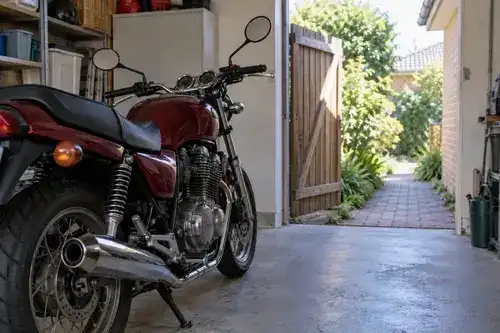
Consider an owner selling a motorcycle that has remained in a rear garage. The engine has not been started during their ownership, movement status is unknown, and access passes through a gate before turning beside a garden bed. A separate box contains parts the owner intends to include.
The owner records those facts, photographs the route from accessible positions and identifies when the gate can be opened. The box receives its own list. The provider is asked to assess the route and confirm whether the loose items fit within the proposed collection.
The brief does not promise that the bike rolls, that a particular vehicle can reach it or that collection will happen on a preferred day. It supplies the information needed for a specific conversation. Any additional assessment and the final arrangement remain to be confirmed by the parties involved.
Clear access information supports a better handover
A useful collection brief connects the motorcycle with the place it occupies. It keeps known condition, uncertain movement status, property access and included items visible in one record.
Precision matters more than confident assumptions. Describe the current situation, allow the collecting party to assess it and keep later changes attached to the same account. That gives the handover a clearer starting point before anyone arrives at the property.